
Peptides
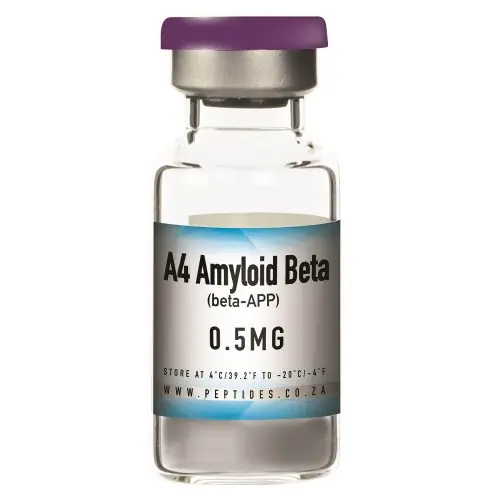
A4 Amyloid Beta (beta-APP)
0.5MG per vial
- Purity
- 97%+
- Size
- 1 vial
- Form
- Powder
R1 650Excl. VAT
Or 4 interest-free payments with
Slow memory loss caused by Alzheimers disease and Down Syndrome.
1
- Injectable peptides come with all the water you need and 10 free syringes
- Door-to-door courier or Postnet to Postnet, anywhere in South Africa
- Individually labelled and packed in heat-resistant material
- Pay with Payflex or EFT
Introduction
Amyloid-beta precursor protein is an integral membrane protein expressed in many tissues and concentrated in the synapses of neurons. It functions as a cell surface receptor and has been implicated as a regulator of synapse formation, neural plasticity, antimicrobial activity, and iron export.
A4 Amyloid beta 0.5MG Amyloid beta-protein/amyloid A4 or amyloid beta-peptide is derived from the amyloid beta-precursor protein. Beta amyloid is an extracellular filamentous protein deposit found in the brain. It is the major protein component of amyloid cores, neuritic plaques and is also found as a deposit in neurofibrillary tangles. In man, Alzheimer’s disease is the most common cause of senile dementia and is characterized by abnormal filamentous protein deposits in the brain. Beta amyloid deposits are also detected in Lewy body dementia, Down’s syndrome, amyloidosis (Dutch type) and in the Guam Parkinson-Dementia complex.
Dosing Details
You inject 2.1ml water into the vial of A4 Amyloid Beta water vial. 1 full syringe is 1ml. You then wait for the vial powder content to dissolve ON ITS OWN. DO NOT SHAKE THE VIAL TO MIX POWDER. Once dissolved and clear in colour you draw out 10 (1 unit) on the syringe each day in the morning and inject subcutaneously into the stomach.
How long will a vial last ?
A vial should last 20 days.
More from this category
All Peptides
For research use only. Not for human or animal consumption.